

Chemical Compatibility & Longevity
When architects specify high-performance glazing, the true test of an Insulating Glass Unit (IGU) lies hidden within its edge seal. A window’s energy efficiency, thermal break integrity, and acoustic insulation depend entirely on a flawless dual-seal system. For global window manufacturers and glass processors, understanding the distinct roles and chemical interactions of primary butyl sealant vs polysulfide sealant is critical to preventing premature window failure, gas leakage, and internal condensation.
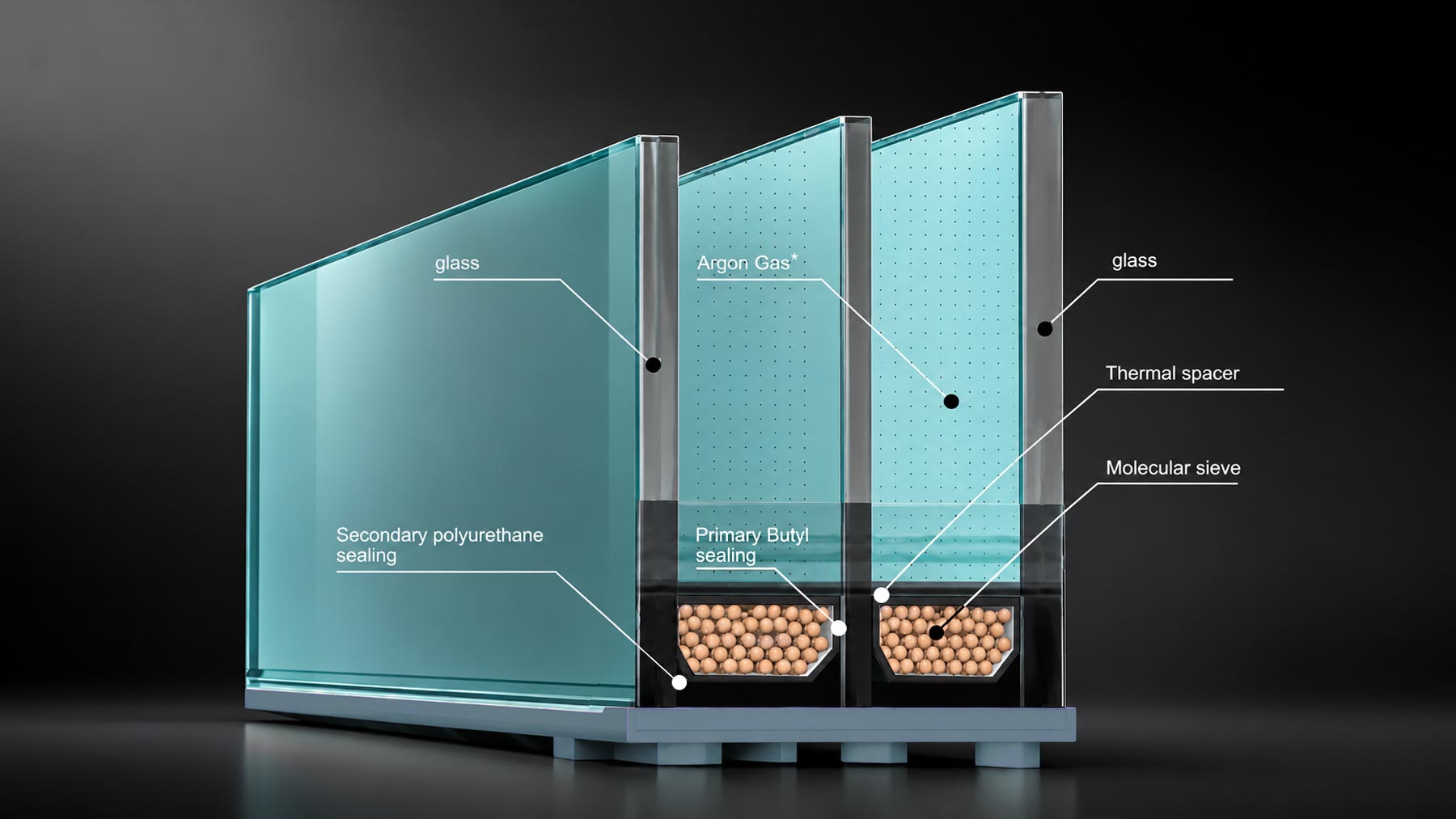
1. The Anatomy of an IGU Edge Seal: Dual-Barrier Protection
Modern double and triple glazing units rely on a two-step sealing process. Unlike single-seal systems of the past—which frequently suffered from moisture ingress and gas migration—the dual-seal approach divides responsibilities between vapor resistance and structural bonding.
- The Primary Seal: Positioned between the spacer bar and the glass panes, its main duty is acting as a moisture vapor and gas barrier.
- The Secondary Seal: Encapsulates the outer cavity behind the spacer, providing structural rigidity, mechanical strength, and weather resistance.
2. Primary Butyl Sealant: The Gas and Moisture Barrier
The primary seal is typically a hot-melt polyisobutylene (PIB) or butyl rubber compound. Its low permeability to moisture vapor and inert gases (such as Argon or Krypton) makes it the frontline defense of the IGU cavity.
Key Technical Expectations:
- Low Gas Permeability: Prevents costly thermal gases from escaping over decades of thermal cycling.
- Exceptional Adhesion: Must bond cleanly to glass and high-frequency welded aluminium spacer bars without losing elasticity.
- Product Spotlight: Premium solutions like MAHTYL butyl sealant are engineered to offer superior aging resistance, minimal moisture vapor transmission rates (MVTR), and robust long-term adhesion under extreme climate shifts.
3. Secondary Sealant: The Structural Backbone
While the primary seal handles gas retention, the secondary seal secures the structural integrity of the entire assembly. It prevents the glass panes from shifting under wind loads, seismic activity, and thermal expansion.
- Polysulfide Sealants: Supplied typically in industrial configurations (such as PS Drum systems), polysulfides are renowned for their exceptional resistance to weathering, UV degradation, and compatibility with most window frame materials.
- Load Distribution: The secondary sealant absorbs mechanical stress, ensuring the IGU remains rigid during transport and installation.
4. Chemical Compatibility: Avoiding the Silent Killer of IGUs
One of the most frequent causes of catastrophic IGU failure is chemical incompatibility between the primary and secondary sealants.
When formulating or assembling high-performance units, engineers must ensure that the solvent or curing agents in the secondary sealant do not plasticize or degrade the primary butyl seal. If a chemical mismatch occurs, the butyl can liquefy or lose bond strength, leading to:
- Argon Gas Leakage: Drastically dropping the window’s U-value and thermal efficiency.
- Fogging and Condensation: Allowing moisture and desiccant saturation inside the cavity.
Technical Comparison Matrix
| Parameter | Primary Sealant (e.g., MAHTYL Butyl) Mahsan Profil Overview | Secondary Sealant (e.g., Polysulfide / PS Drum) Mahsan Profil Overview |
| Primary Function | Vapor & Gas Barrier | Structural Stability & Weather Shield |
| Application Method | Hot-applied extrusion onto spacer sides | Mixed and applied via automated or manual extrusion (Drum systems) |
| Elasticity & Movement | High visco-elastic accommodation | High tensile strength & load bearing |
| UV Resistance | Shielded from direct sunlight by spacer/secondary seal | Excellent direct resistance to environmental exposure |
5. Visual & Graphic Suggestions (For AI Generation)
To make this technical article high-performing and engaging for global B2B clients, integrate the following visuals:
- Infographic 1 (Cross-Section Diagram): A detailed technical cross-section of an IGU edge seal, clearly highlighting the aluminum spacer bar, molecular sieve desiccant, primary butyl layer, and secondary polysulfide layer. (Prompt for Google AI / Midjourney: “A clean, technical cross-section diagram of a double-glazed insulating glass unit edge seal, showing glass panes, aluminum spacer bar, primary butyl sealant, and secondary polysulfide sealant, vector style, industrial blue and white tones.”)
- Chart 1 (Gas Retention Performance): A comparative line graph illustrating Argon gas retention rates over 10 years using compatible high-grade sealants vs. standard low-quality alternatives.
Conclusion: Securing Long-Term Reliability
For global IGU manufacturers, cutting corners on edge sealants directly impacts warranty claims and brand reputation. By utilizing precisely matched systems—such as pairing high-purity aluminium spacer components with advanced MAHTYL primary sealants and robust PS Drum polysulfide secondary options—manufacturers can guarantee decades of thermal compliance and structural durability
One Response
I’ve known Mahsan Profile for years and I source my factory’s raw materials from them. Your quality is excellent, and your team is expert and hardworking